
Tina Marie’s Music and Musings
Showing posts with label marriage. Show all posts
Showing posts with label marriage. Show all posts
Wednesday, February 26, 2025
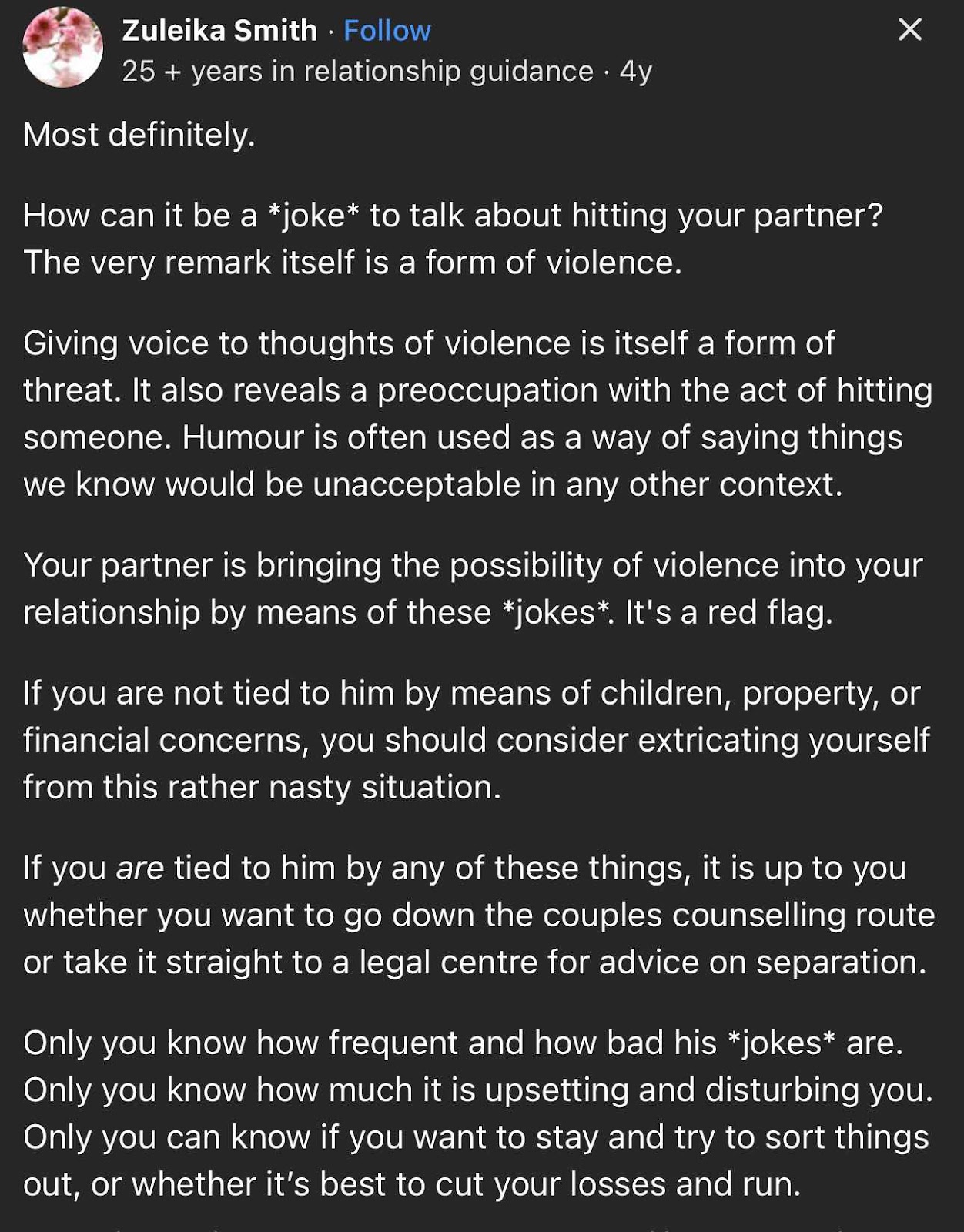

Thursday, November 21, 2024
Monday, November 11, 2024
Monday, November 4, 2024
Can He Rape Me if We’re Married?
Can He Rape Me if We're Married?
Stealthing can be another type of rape abusers may use. This is when a rapist-abuser removes a condom before or during sex without their partner’s consent. This can lead to an increased risk of sexually transmitted diseases or pregnancy, the latter of which is a way some abusers try to trap survivors in a relationship. For more information, see our Guide to Reproductive and Sexual Coercion.
7 signs your husband is sexually abusing you (and what to do about it)
7 signs your husband is sexually abusing you (and what to do about it)
2. He refuses to practice safe sex
Experts say sexual abuse includes being forced to participate in any degrading, unwanted or unsafe sexual act. This means even if you consent to sex with your husband, it’s still abuse if you asked him to wear protection and he refuses.
Sexual abuse includes any situation where someone forces you to do uncomfortable intimate acts. If you’re comfortable using protection, your partner should respect and uphold that.
7. He insults and criticizes your body
Sexual harassment ranges from degrading remarks to inappropriate physical contact. This includes your spouse insulting your body and your looks. Your sweetheart should not shame you for the way you look — a loving husband will never harm your self-esteem.
Just because you’re married doesn’t mean your body belongs to your husband. A healthy sexual relationship involves two people who respect each other and will never force the other to do something uncomfortable or harmful.
Contact the U.S. National Sexual Assault Hotline at 800-656-HOPE (4673). You can also chat online to receive support, information and advice from a trained specialist.
Sexual coercion: What it is, examples, and getting help
Sexual coercion: What it is, examples, and getting help
- Using substances: A person may encourage someone to use drugs or alcohol to make them more compliant and therefore easier to coerce into sex. If a person has sex with someone while inebriated or unconscious, this is rape.
A person may use sexual coercion alongside other types of abuse, such as coercive control. This involves demanding control over many aspects of their partner’s life, such as:
- what they wear
- where they go
- who they socialize with
Demeaning or insulting comments, humiliation, and gaslighting may also wear down someone’s self-esteem.
Kollontai: Love and the New Morality
Kollontai: Love and the New Morality
What are the chief inadequacies, what are the dark sides, of legal marriage? Legal marriage is based on two equally false principles: that marriage should be forever and that the partners belong to each other and are each other’s property.
The idea of marriage-for-ever is in contradiction to all that psychological scientists know about how the psyche changes during the long course of a human’s life. The demand made by contemporary morality deserves to be laughed at: each person must at all costs ‘find their happiness’. People are obliged to select straight away and without making a mistake the one person from among the millions of their contemporaries with whom their soul is in harmony. Only by discovering their “second self” will they be guaranteed a successful marriage. If a person–especially if that person is a woman–in groping for the ideal, tears the heart on the sharp thorns of life’s disappointments, society, perverted by current morality, instead of coming forward to help a fellow human being in distress starts victimising that person. “Society must coerce people into their ‘happiness’–this is the fine flower of our sexual morality.” Modern society doesn’t care about individual happiness or even about ‘appearances’. Society has the interests of property at heart and for this reason is prepared to look on an open change of relationship as a great personal insult. Meisel-Hess drily points out that “marriage is like a flat: you become aware of its dark corners only when you’ve lived in it a while. It’s hard luck, of course, if you have to change flats all the time because they turn out to be uncomfortable and inadequate. But that’s better than being forced by circumstances to stay in an unsuitable place. It must be completely accepted by society that a person, in the course of his long life and in the process of the development of his personality, will change sexual partners.”
It seems even more absurd that marriages should be indissoluble when you bear in mind that most legal marriages are contracted ‘in the dark’; the marriage partners have only the vaguest idea of each other. They know little about the personality of the other and more than that they have absolutely no idea if they are suited physically–and happiness in marriage is not possible unless there is this physical harmony. ‘Trial nights’ which according to Meisel-Hess were common practice in the Middle Ages, are far from being ‘absurdly lacking in decency’. In a different social environment people might, in the interest of the human race and in order to ensure the happiness of individuals, exercise this right.
The idea of property and the ‘undisputed rights of possession’ that one partner has over the other is the second factor poisoning legal marriage. In fact you get this ridiculous situation. The complicated, many-sided personalities of two people who are close to each other only in a few ways are ‘obliged’ to suit each other in every way. ‘Undisputed possession’ leads to the partners being always and inconveniently with each other. You no longer have your own time, your own will, and because of the economic dependence involved, you often don’t have even your ‘own separate corner’. The continual presence of the other person and the inevitably unreasonable demands made on one, as on a piece of property, turn even a passionate love into indifference and lead to an insufferable nagging over little things. You really have to agree with Meisel-Hess that when two people live on top of each other all the time the tender spring flower of even the most loving attachment will be killed. You need to have so much consideration for the other person, such a great supply of ‘warmth’, if you are to develop out of the first rush of passion the rich fruits of a deep irrevocable emotional attachment, formed in the sun of mutual warmth.
The sense of ‘property’ and of the ‘foreverness’ of legal marriage has a harmful effect on the psyche; a man has to make only the smallest emotional effort to preserve the external trappings of an attachment since the partner is in any case rivetted to him for life. The modern form of legal marriage impoverishes the soul and in no way helps mankind to gather the store of ‘great love’ which the Russian genius Tolstoy talked of and longed for.
Subscribe to:
Posts (Atom)

-
Self-Gaslighting: The Harm of Being Gaslighted Monopolization of perception is a term used by psychologist Albert Biderman in his chart of ...
-
Economic Manuscripts: Preface to A Contribution to the Critique of Political Economy The quote, “It is not the consciousness of men that d...

